Italy: Spring on the Amalfi Coast

🌿 Amalfi Coast in March vs. April: Which Spring Escape Is Right for You?

By Vincent | Updated October 2025

March: The Quiet Awakening

March on the Amalfi Coast is a serene, slow-blooming experience. With highs around 61°F and frequent showers, it’s ideal for travelers who crave solitude and local authenticity.

  • Atmosphere: Towns begin reopening, locals prep for the season.
  • Crowds: Minimal — perfect for peaceful hikes and photography.
  • Activities: Explore Cetara, hike the Path of the Gods, enjoy quiet piazzas.
  • Best Base: Sorrento — reliable lodging and transit options.

April: Spring in Full Swing

April brings warmer days and festive energy. With highs near 66°F, it’s a sweet spot before the summer rush.

  • Atmosphere: Coast is fully open, ferries and shops running.
  • Events: Easter processions in Sorrento and Minori.
  • Activities: Day trips to Capri, seaside lunches, scenic hikes.
  • Best Base: Positano or Amalfi — vibrant yet uncrowded.

🆚 Side-by-Side Comparison

Feature March 🌧️ April 🌤️
Weather Cool, variable (50–61°F) Milder, sunnier (55–66°F)
Crowds Very quiet Low, except Easter week
Open Businesses Limited Most fully open
Activities Hiking, local life Capri trips, Easter events
Best Base Sorrento Positano, Amalfi

🚤 Getting Around the Coast – Ferry Service

Ferry service on the Amalfi Coast begins in late March but is limited; by mid-April, most routes are fully operational with frequent connections between towns and islands.

Here’s a breakdown of what to expect if you’re planning ferry travel in March versus April:

🚤 March: Limited Launch Phase

  • Season Start: Ferry service officially begins in late March, but only a few routes operate depending on weather.
  • Available Routes:
    • Sorrento ↔ Naples ↔ Capri ↔ Ischia ↔ Procida: These run year-round, weather permitting.
    • Amalfi ↔ Positano ↔ Salerno: May begin late March, but not all companies are active yet.
  • Frequency: Sparse — expect 1–2 sailings per day, often mid-morning only.
  • Booking: May not be available online for all routes; check local ticket offices or Travelmar and Ferryhopper for updates.

🌸 April: Full Ferry Season Begins

  • Mid-April Onward: Most ferry companies are in full swing, with expanded schedules and more destinations.
  • Available Routes:
    • Amalfi ↔ Positano ↔ Capri ↔ Salerno ↔ Sorrento
    • Maiori, Minori, Cetara, Vietri sul Mare also connect to Amalfi and Capri.
  • Frequency: Multiple sailings per day, including morning and afternoon options.
  • Booking: Online reservations are widely available and recommended, especially around Easter week.
  • Comfort Tip: Ferries are preferred over buses — smoother, scenic, and often faster due to road congestion.

🧭 Summary Table: March vs. April Ferry Service

Feature March 🚧 April 🚀
Season Status Limited launch phase Full season begins mid-April
Routes Available Sorrento–Capri, Naples–Ischia All major coastal and island routes
Frequency 1–2 sailings/day (weather-based) Multiple sailings/day
Booking Options Mostly local Online and local
Crowds Very light Moderate (Easter week busy)

Final Thoughts

Choose March for introspective travel and quiet charm. Opt for April if you want more options, festive vibes, and warmer days — without the summer crowds.


How to Travel from Sorrento to Ravello by Ferry

The journey from Sorrento to Ravello is one of the most scenic routes along the Amalfi Coast, offering breathtaking views of the Mediterranean. While there is no direct ferry from Sorrento to Ravello, you can take a ferry to Amalfi and then continue to Ravello by bus or taxi.

This page has extensive information on Visiting Ravello.

Step 1: Taking the Ferry from Sorrento to Amalfi

The Port of Sorrento offers regular ferry services to Amalfi, operated by companies like Navigazione Libera del Golfo (NLG tickets). The ferry ride takes approximately 1 hour and 20 minutes, providing stunning coastal views along the way.
Bus and Ferry Schedule

Taking the Bus from Sorrento to Amalfi SITA Bus: Sorrento – Amalfi

    Step 2: Traveling from Amalfi to Ravello

    Once you arrive at the Port of Amalfi, you have two main options to reach Ravello:

    1. Bus – The SITA bus runs frequently from Amalfi to Ravello, taking about 30 minutes. Tickets cost around €2–5. SITA Bus: Amalfi – Ravello
    2. Taxi – If you prefer a more comfortable and direct option, taxis are available at the port, though they can be more expensive.

    Tips for a Smooth Journey

    • Book ferry tickets in advance to secure your spot, especially during peak tourist seasons.
    • Check the weather before traveling, as ferry services may be affected by rough seas.
    • Wear comfortable shoes, as Ravello is known for its charming but hilly streets.

    Exploring Ravello after this scenic journey is well worth the effort. From the Villa Rufolo gardens to the breathtaking views at Villa Cimbrone, this hilltop town is a must-visit destination on the Amalfi Coast. Enjoy your trip! 🚢🌊

    The Equalizer 3

    Watch a Trailer and The People of Atrani

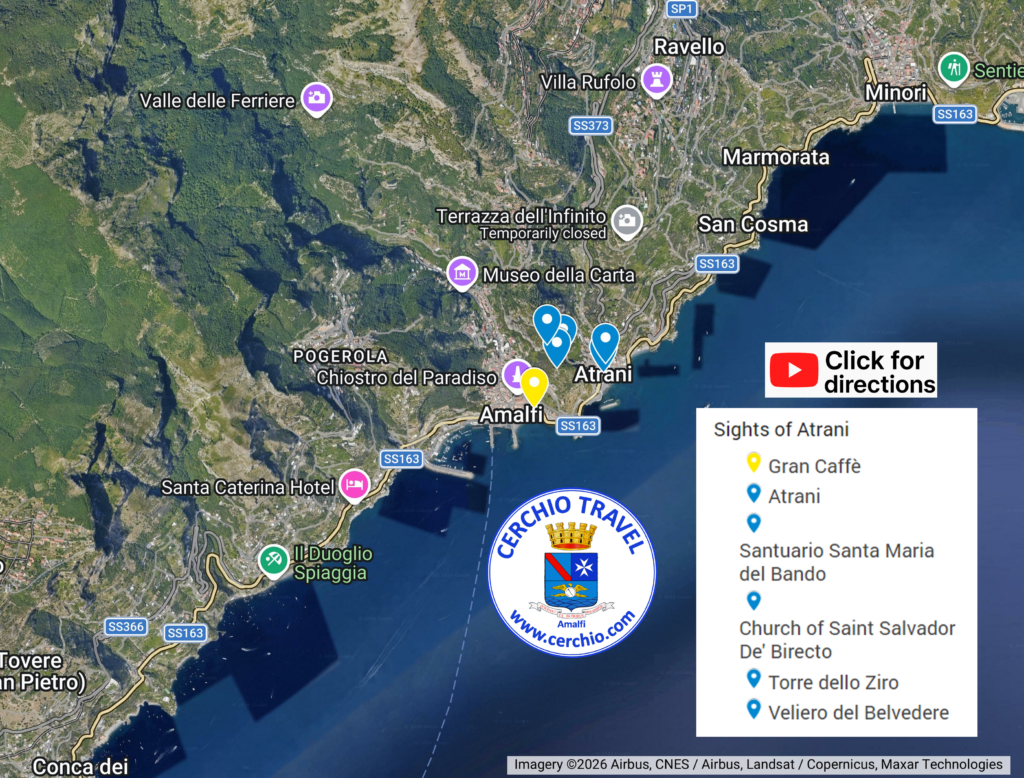
    The Equalizer 3 Locations Map and Video

    Where is the church in Equalizer 3?

    If you’re wondering about the stunning church featured in The Equalizer 3, look no further than Santuario Santa Maria del Bando. Perched high above Atrani on the Amalfi Coast, this hilltop sanctuary offers breathtaking views—but reaching it is no easy feat! Prepare for a steep climb that doubles as a solid glute workout, making the journey as rewarding as the destination.

    Where on the Amalfi Coast was Equalizer 3 filmed?
    Atrani, Italy, is the heart of The Equalizer 3’s Amalfi Coast filming locations. Nestled between Amalfi and San Cosma, this small seaside commune provides a picturesque backdrop that perfectly complements the film’s gripping storyline. While Atrani’s beach offers mesmerizing views, for truly jaw-dropping panoramas, head up to Torre dello Ziro, Veliero del Belvedere, or—if you’re up for the challenge—Santuario Santa Maria del Bando.

    Atrani: A Hidden Gem with a Rich History

    Nestled along the stunning Amalfi Coast, Atrani (map) is a charming seaside town that has preserved its medieval roots while embracing the beauty of coastal life. Though it holds the title of Italy’s smallest municipality, its history is anything but small.

    From Ancient Settlements to the Duchy of Amalfi

    Atrani’s origins trace back to Greek and Etruscan influences, with evidence suggesting early settlements thrived due to its strategic coastal position. By the 6th century, the town became a vital part of the Duchy of Amalfi, serving as the residential enclave for aristocrats while Amalfi held the political reins.

    One of Atrani’s most significant landmarks, the Church of San Salvatore de Birecto, played a crucial role in regional history. Dukes of Amalfi were crowned and buried here, reinforcing Atrani’s stature as a ceremonial center.

    Pirates, Power Shifts, and the 18th-Century Boom

    Throughout the Middle Ages, Atrani experienced turbulent times. The Republic of Pisa raided Amalfi and Atrani in 1135 and 1137, disrupting the town’s prosperity. Later, Normans, Swabians, Angevins, and Spanish rulers left their mark, shaping the town’s architecture and traditions.

    During the 18th century, under Bourbon rule, Atrani thrived economically, with paper mills, textile factories, and pasta production fueling local commerce. The town’s pasta trade became well-known, reaching markets as far as Calabria.

    Atrani Today: A Timeless Coastal Retreat

    Modern-day Atrani is a picturesque escape, maintaining its traditional layout of whitewashed houses clustered around Piazza Umberto I. Its hidden alleys, intimate beach, and authentic community vibe make it a rare find on the Amalfi Coast. Unlike more tourist-heavy destinations, Atrani remains a peaceful retreat, offering visitors a glimpse into Italy’s historic soul with its preserved medieval charm.

    Santuario Santa Maria del Bando

    Santuario Santa Maria del Bando is a hidden gem perched high above Atrani on the Amalfi Coast. This historic sanctuary, dating back to 1187, is nestled into the rugged cliffs, offering breathtaking views of the coastline and the valley below. The name “del Bando” comes from an ancient tradition—this was the site where official proclamations and announcements were made to the people of Atrani.

    Reaching the sanctuary is an adventure in itself. Visitors must climb 750 steps through winding alleyways and lush lemon groves to reach the church. Along the way, the scent of wild herbs and the sight of colorful homes make the journey as enchanting as the destination. Once at the top, the sanctuary’s Romanesque-Amalfitan architecture, with its single nave and barrel-vaulted ceiling, creates a peaceful retreat. Inside, a 15th-century fresco depicts the Virgin Mary intervening to save a condemned man, a legend that adds to the site’s mystique.

    For those seeking a spiritual or scenic escape, Santuario Santa Maria del Bando is a must-visit. Whether you’re drawn by its history, its panoramic views, or the challenge of the climb, this sanctuary embodies the timeless beauty of the Amalfi Coast.


    Torre dello Ziro: A Historic Watchtower with a Dark Legend

    Perched high above the Amalfi Coast, Torre dello Ziro is a medieval watchtower that offers breathtaking panoramic views of Atrani, Amalfi, and the Gulf of Salerno. Built in the 15th century, this fortress once served as a defensive outpost against pirate invasions, standing as a silent guardian over the coastline.

    Beyond its strategic importance, Torre dello Ziro is steeped in legend. It is said to be the site where Giovanna d’Aragona, Duchess of Amalfi, met a tragic fate. After secretly marrying her servant, Antonio Bologna, she was allegedly imprisoned in the tower by her brothers and ultimately executed—a story that inspired literary works, including John Webster’s The Duchess of Malfi.

    Today, Torre dello Ziro is a must-visit for history lovers and hikers alike. The 45-minute trek from Pontone winds through lush Mediterranean landscapes, leading to the tower’s well-preserved ruins. The best time to visit is during spring or autumn, when the weather is mild and the golden-hour light makes for stunning photography.


    Veliero del Belvedere: A Hidden Gem with Stunning Coastal Views

    Nestled in the charming town of Scala, Veliero del Belvedere is an exceptional observation deck that offers breathtaking panoramic views of the Amalfi Coast. From this scenic spot, visitors can admire the dramatic cliffs, azure waters, and colorful hillside villages that define this iconic region.

    The serene atmosphere makes Veliero del Belvedere a perfect escape from the more crowded tourist areas. Whether you’re a photography enthusiast looking to capture postcard-worthy landscapes or simply seeking a peaceful retreat, this location delivers an unforgettable experience. The fresh Mediterranean air and mild climate enhance the visit, allowing you to fully immerse yourself in the beauty of the surroundings.

    For those eager to explore more, Veliero del Belvedere serves as a great starting point for discovering Scala’s historical sites and local eateries. As the sun sets, the sky transforms into a mesmerizing blend of colors, creating a magical atmosphere ideal for romantic evenings or quiet contemplation.


    Church of San Salvatore de Birecto: A Historic Jewel of Atrani

    Nestled in Piazza Umberto I, the Church of San Salvatore de Birecto is one of Atrani’s most historically significant landmarks. Dating back to 940, this church played a crucial role in the Maritime Republic of Amalfi, serving as the site where dukes were crowned and later buried.

    Architectural Significance

    The church’s three-nave structure reflects its medieval origins, though it has undergone several transformations over the centuries. A baroque-style facade, added later, features a clock framed by Ionic pilasters, topped with a gabled belfry. Inside, visitors can admire a bronze door, commissioned by Pantaleone di Viarecta in 1076, which showcases 24 intricately designed panels depicting Christ, the Virgin Mary, and various saints.

    Cultural & Religious Importance

    San Salvatore de Birecto is deeply tied to Atrani’s Byzantine heritage. Every September 1st, the town celebrates the Byzantine New Year, a tradition that honors its medieval past. The church also houses marble artifacts, including a 12th-century pluteus featuring symbolic carvings of peacocks, mermaids, and other figures.

    Visiting the Church

    Recently restored, the church is now open to visitors during liturgical celebrations or by special arrangement. Its historical significance, artistic treasures, and connection to Atrani’s noble past make it a must-see for history enthusiasts exploring the Amalfi Coast.